
100 years of port history
Before telecommunication cables and airplanes came into use, ships were Iceland’s connection to the rest of the world. Goods, people, and news all arrived by sea. Since its establishment, the port has been the center of economic activity in Reykjavík, and the state of the economy could often be measured by the level of activity at the harbour.
A harbourless capital
By the mid-19th century, Reykjavík had a natural harbour but lacked adequate facilities for ships, passengers, and cargo transport.
Trade Liberalisation and the first harbour committee
In 1855 and 1856, the formal organisation of port affairs began with the introduction of trade liberalisation, the establishment of harbour tariffs, and the creation of a harbour committee.
Plans that failed due to cost
From 1857 to the end of the 19th century, numerous proposals for harbour construction were put forward, but most failed due to cost or lack of support.
Bæjarbryggjan and Steinbryggjan
The town’s first true harbour structures were Bæjarbryggjan (e. the Town Pier) and later Steinbryggjan (e. the Stone Pier), but they proved insufficient.
Debates on location and governance

In the early years of the 20th century, there were significant debates over where the harbour should be built and who should have control over its facilities.
The turning point

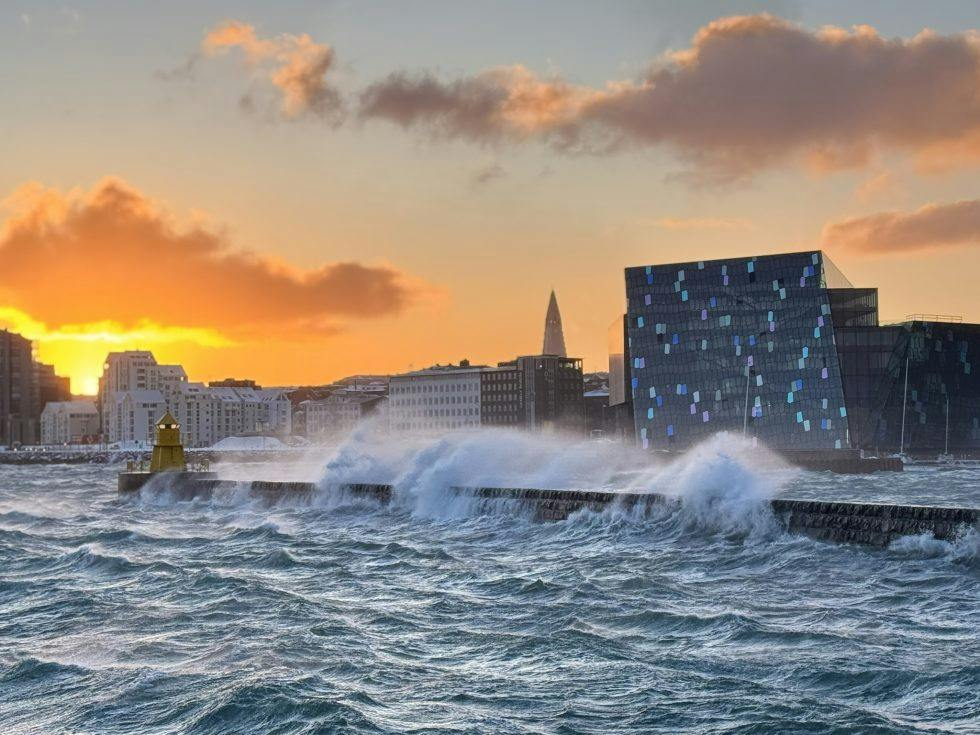
Between 1905 and 1910, decisive developments took place in port affairs when Gabriel Smith presented a viable plan and a severe storm convinced many sceptics.
The construction of the Reykjavík harbour
With a tender issued in 1912 and construction beginning in 1913, the building of Reykjavík Harbour finally commenced after decades of preparation.
The center for trade and fisheries

Within a few years of the harbour’s opening, Reykjavík became the country’s main hub for imports and exports, as well as a major fishing town.
Fjölbreytt hafnarstarfsemi og vaxandi atvinnulíf
From the interwar period through to the 1970s, the harbour area expanded with new shipping companies, fish processing operations, and a wide range of services.
Development of Sundahöfn

Congestion in the Old Harbour led to the development of Sundahöfn as a new centre for port operations.
Modernisation of the harbour
Since 1970, technological advances and continued development of port operations in Reykjavík have transformed the entire harbour.